Surf Guide: A Comprehensive Overview (Updated 03/26/2026)
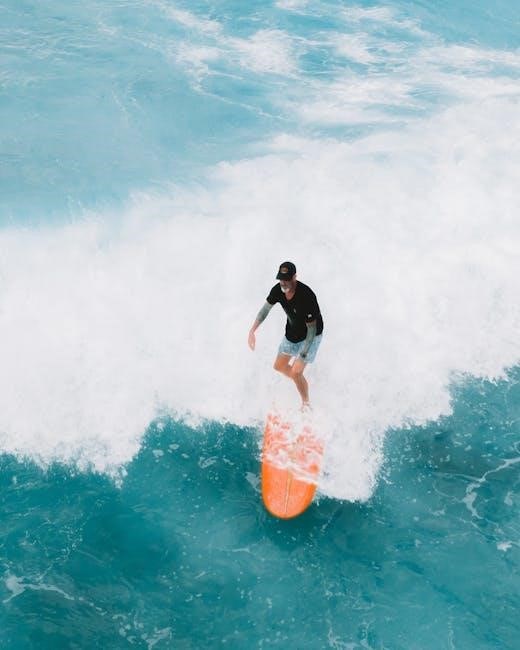
This comprehensive surf guide, updated today, offers insights for beginners, emphasizing practice, safety, and technique. Discover top US spots and essential equipment knowledge!
Surfing is an exhilarating watersport steeped in history and culture, captivating enthusiasts worldwide with its unique blend of athleticism and connection with nature. The allure lies in harnessing the power of ocean waves, gliding across the water’s surface, and experiencing the thrill of riding a dynamic force. It’s a pursuit that demands patience, dedication, and respect for the ocean’s immense power.
However, surfing isn’t simply about standing up on a board; it’s a journey of learning, adaptation, and continuous improvement. It requires understanding wave dynamics, mastering paddling techniques, and developing the core strength and balance necessary to navigate the ever-changing ocean environment. The initial learning curve can be challenging, but the rewards – the feeling of riding a wave – are immeasurable.
Why Surfing is Popular
The popularity of surfing stems from a potent combination of factors, appealing to a diverse range of individuals seeking adventure, relaxation, and a deeper connection with the natural world. The sensory experience – the sound of crashing waves, the warmth of the sun, and the feeling of gliding across the water – is profoundly captivating. It offers an escape from the stresses of daily life, promoting mindfulness and a sense of freedom.
Beyond the sensory appeal, surfing provides a fantastic physical workout, engaging core strength, balance, and cardiovascular endurance. It’s a sport that fosters a strong community, built on shared passion and mutual respect. Despite a learning curve, the challenge itself is a draw, motivating individuals to persevere and experience the unique satisfaction of riding a wave.
The Importance of Practice
Consistent practice is undeniably the cornerstone of improvement in surfing; it’s the single most crucial ingredient for progression. Surfing isn’t a skill mastered overnight – it demands dedicated time in the water, repeatedly paddling out, attempting pop-ups, and inevitably, experiencing falls. Each attempt, successful or not, builds muscle memory and refines technique.
The more time spent surfing, the better one understands wave dynamics, board control, and positioning. Practice isn’t just about physical repetition; it’s about learning from each experience, analyzing mistakes, and adapting accordingly. Embracing the process of falling and trying again is essential, fostering resilience and a growth mindset.
Top Surf Spots in the United States
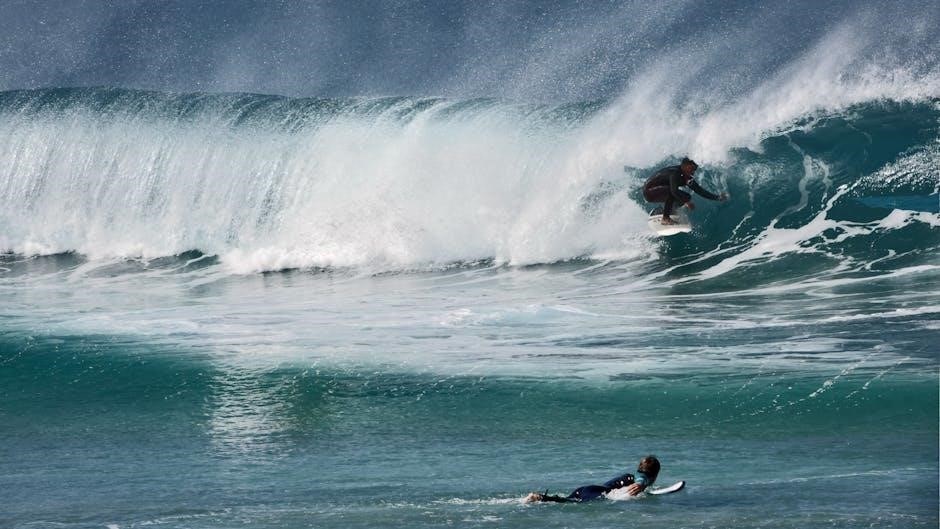
From coast to coast, the US boasts incredible surf locations, catering to all skill levels. Discover prime destinations for both beginners and experienced surfers alike!
Beginner-Friendly Locations
Embarking on your surfing journey requires selecting the right location. Several spots across the United States are renowned for their gentle waves and welcoming atmosphere, ideal for those new to the sport. These locations often feature sandy bottoms, minimizing the risk of injury, and consistent, smaller swells perfect for learning the fundamentals.

Finding a beach town praised for beginner surfers is key. The Inertia highlights excellent options, providing valuable insights for planning your first surf trip. Remember, a gradual learning curve is natural, and choosing a forgiving wave is paramount to building confidence and enjoying the experience. Prioritize spots known for patient instructors and a supportive surf community.
Florida as a Prime Learning Destination
Florida emerges as an exceptional destination for aspiring surfers, particularly during the summer months. The state offers a unique advantage: the potential for waves even during typically flat summer conditions. This makes it an ideal time for beginners to learn or for those with some experience to refine their skills.
Memorial Day weekend specifically presents a fantastic opportunity to hit the waves. The warm sun and inviting waters create a comfortable learning environment. Florida’s consistent, smaller waves are perfect for mastering the basics, building confidence, and enjoying the thrill of surfing without overwhelming challenges. It’s a truly accessible entry point into the world of surfing!
Memorial Day Weekend Surfing
Memorial Day weekend signifies an excellent opportunity to experience the joy of surfing, especially in locations like Florida. The timing often coincides with favorable conditions for beginner surfers, offering a blend of warm weather and manageable waves. It’s a chance to escape, connect with the ocean, and embrace the surfing lifestyle.
Even during the summer’s generally flatter periods, Florida can deliver rideable waves, making it a prime location for learning or improving. This weekend provides a perfect window to paddle out, practice your pop-up, and enjoy the thrill of riding the white water. It’s a memorable way to kick off the summer season!
Essential Surfing Equipment
Proper gear is crucial for a safe and enjoyable surfing experience; This includes selecting the right surfboard, leash, wax, and wetsuit based on conditions.
Surfboard Selection for Beginners
Choosing the right surfboard is paramount for new surfers, directly impacting learning speed and enjoyment. Beginners should opt for larger, wider boards – typically longboards or foam tops – offering superior stability and buoyancy. These characteristics make paddling easier and catching waves more accessible.
Avoid shortboards initially, as they demand more skill and wave knowledge. A longer board provides a more forgiving platform to practice paddling, popping up, and maintaining balance. Foam tops are particularly excellent due to their soft construction, minimizing injury risk during falls. Consider the volume of the board; higher volume equates to greater floatation.
Rental shops are a great starting point to experiment with different board types before investing in your own. Don’t hesitate to ask experienced surfers or shop staff for personalized recommendations based on your weight, fitness level, and local wave conditions.
Leash and Wax Importance
A leash is a non-negotiable safety item for all surfers, especially beginners. It connects you to your board, preventing it from drifting away after a wipeout, potentially endangering yourself and others. Choose a leash length appropriate for your board size – generally, the leash should be as long as, or slightly longer than, the board.
Surf wax is equally crucial, providing the necessary grip on the board’s surface for secure footing. Different water temperatures require different wax types; colder water necessitates harder wax, while warmer water calls for softer wax.
Apply wax liberally to the deck of your board, using a circular motion, and regularly re-apply as needed. A well-waxed board dramatically improves control and prevents slipping, fostering confidence and accelerating learning.
Wetsuit Considerations
Choosing the right wetsuit is paramount for comfort and safety, dictated primarily by water temperature. Wetsuits trap a thin layer of water between your skin and the suit, which your body heats, providing insulation. Thickness is measured in millimeters (e.g., 3/2mm, 4/3mm).
For water temperatures below 60°F (15°C), a 4/3mm or thicker wetsuit is recommended. Between 60-70°F (15-21°C), a 3/2mm suit is generally sufficient. Above 70°F (21°C), a springsuit or even boardshorts may suffice.
Consider the wetsuit’s fit – it should be snug but not restrictive, allowing for freedom of movement. Features like sealed seams and integrated hoods can enhance warmth in colder conditions.

Surfing Techniques for Beginners
Mastering paddling, the pop-up, and riding whitewater are foundational skills. Consistent practice builds muscle memory and confidence, enabling successful wave riding experiences.
Paddling Techniques
Effective paddling is the cornerstone of surfing, demanding both strength and proper form. Lie prone on the board, positioning yourself centrally for balance. Utilize long, powerful strokes, reaching forward and pulling the water back towards your hips. Keep your head up and eyes focused forward to anticipate waves.
Arch your back slightly to create a streamlined profile, reducing drag. Engage your core muscles for stability and power transfer. Remember to paddle with the wave, not against it, when positioning yourself for a take-off. Consistent paddling builds endurance, crucial for extended surf sessions. Practice makes perfect – the more you paddle, the more efficient and less tiring it becomes!
Pop-Up Fundamentals
The pop-up is the transition from paddling to standing – a critical skill for every surfer. Begin by placing your hands flat on the board, near your chest, as you feel the wave lifting you. In one swift motion, push up and bring your feet underneath you, landing in a balanced stance.
Keep your knees bent and your weight centered over the board. Avoid looking down; focus on the direction you want to go. Practice this movement on land repeatedly to build muscle memory. A quick, fluid pop-up is key to successfully riding the wave. Timing is everything – pop up too early or late, and you’ll likely fall!
Riding the White Water
For beginners, mastering the white water is a crucial first step. White water, the broken part of the wave, provides a gentler learning environment. Paddle strongly towards the shore as the wave approaches, aiming to match its speed. As the wave pushes you, practice your pop-up and maintain a low center of gravity.
Focus on keeping your balance and looking ahead. Riding white water builds confidence and allows you to practice essential skills before tackling unbroken waves. It’s a fantastic way to get comfortable with the feeling of being propelled by the ocean’s energy and refine your technique.

Surf Safety Guidelines
Prioritize ocean awareness, understand rip currents, and respect surfing etiquette for a safe experience. Knowledge of conditions and responsible behavior are paramount.
Understanding Ocean Conditions
Before paddling out, thoroughly assess the ocean environment. Observing wave patterns is crucial; look for consistent sets and identify potential hazards like rocks or shallow areas. Pay close attention to the tide – incoming tides often create stronger currents, while outgoing tides can expose reefs.
Wind direction significantly impacts wave quality; offshore winds groom waves, while onshore winds can create choppy conditions. Most importantly, learn to recognize the signs of a rip current – a powerful channel of water flowing away from the shore. These can appear as areas of darker, calmer water, or lines of foam moving seaward.
Understanding these conditions empowers surfers to make informed decisions, minimizing risks and maximizing enjoyment. Always err on the side of caution and never surf beyond your abilities.
Rip Current Awareness
Rip currents are a significant hazard for surfers and swimmers alike, responsible for a large percentage of ocean rescues. Identifying them is paramount to surf safety. Look for channels of choppy, discolored water, areas with a lack of breaking waves, or lines of foam moving steadily offshore.
If caught in a rip current, do not panic and do not swim directly against it. Instead, swim parallel to the shore until you escape the current’s pull. Once free, swim at an angle away from the rip and back towards the beach.
Remember, rip currents don’t pull you under the water, they pull you away from the shore. Signal for help if needed, and always surf with a buddy. Knowing how to identify and respond to rip currents can be life-saving.
Surfing Etiquette
Respectful behavior in the water is crucial for a positive surfing experience for everyone. The surfer closest to the peak of the wave has the right-of-way; others should not drop in. “Dropping in” means paddling for and taking off on a wave that another surfer is already riding.
Paddle wide around the lineup to avoid interfering with surfers riding waves. When paddling back out, paddle behind the breaking waves or through the impact zone, being mindful of others.
Communicate with fellow surfers, and apologize if you accidentally make a mistake. Share waves, be patient, and maintain a friendly attitude. Following these simple rules ensures a safe and enjoyable surfing environment for all.
Improving Your Surfing Skills
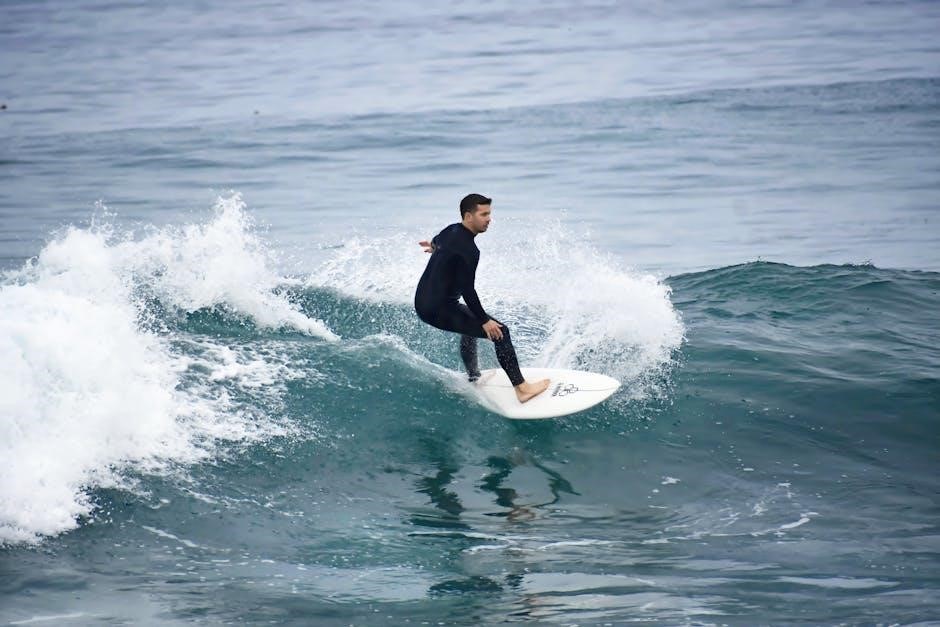
Consistent practice, professional instruction, and self-analysis are key to progression. Dedication to refining technique and understanding wave dynamics unlocks surfing potential.
Consistent Practice Schedule
Establishing a regular surfing schedule is paramount for skill development. Surfing, like any sport, demands repetition and dedicated time in the water to build muscle memory and refine technique. Aim for at least two to three sessions per week, even if conditions aren’t perfect; smaller waves offer excellent practice for pop-ups and maneuvering.
Consistency isn’t just about frequency, but also about focused effort. Each session should have a specific goal – perhaps working on your paddling endurance, perfecting your pop-up, or attempting a new turn. Keep a surf journal to track progress, noting wave conditions, successes, and areas for improvement. Remember, time spent in the water is the single most important ingredient for becoming a better surfer!
Seeking Professional Instruction
While self-teaching is possible, professional surf instruction significantly accelerates learning and fosters good habits. A qualified instructor provides personalized feedback on technique, ensuring a solid foundation in paddling, pop-up mechanics, and wave riding etiquette. They can also tailor lessons to your individual skill level and physical abilities.
Group lessons offer a cost-effective introduction, while private lessons provide more focused attention. Instructors also impart crucial safety knowledge, including understanding ocean conditions and recognizing potential hazards like rip currents. Investing in a few lessons early on can prevent the development of incorrect techniques that are difficult to unlearn, ultimately leading to faster progress and a more enjoyable surfing experience.
Analyzing Your Performance
Consistent self-assessment is vital for improvement in surfing. After each session, reflect on what went well and identify areas needing work. Consider factors like paddle speed, pop-up timing, and ability to maintain balance while riding the wave. Video recording your sessions provides invaluable visual feedback, allowing you to objectively analyze your technique.
Compare your performance to experienced surfers, noting differences in positioning and wave selection. Don’t be afraid to ask for constructive criticism from fellow surfers or your instructor. Tracking your progress – noting wave count, successful maneuvers, and challenges faced – helps maintain motivation and demonstrates tangible improvement over time.
Surf Forecasting and Resources
Reliable surf reports are crucial for planning sessions, understanding wave height, and period. Utilize online resources to maximize your time in the water!
Utilizing Surf Reports
Successfully navigating the waves begins with understanding and effectively utilizing surf reports; These reports provide vital information about current and predicted ocean conditions, empowering surfers to make informed decisions. Key elements to focus on include wave height, swell direction, swell period, and wind conditions. Wave height indicates the size of the waves, while swell direction reveals the origin of the energy.
Swell period signifies the time between waves – a longer period generally means more powerful waves. Wind conditions significantly impact wave quality; offshore winds groom waves, while onshore winds can create choppy conditions. Several websites and apps specialize in surf forecasting, offering detailed reports and charts. Regularly checking these resources before heading out ensures you’re prepared for the conditions and can select the most suitable location.
Understanding Wave Height and Period
Deciphering wave height and period is crucial for assessing surf conditions and matching them to your skill level. Wave height, typically measured in feet, indicates the distance from trough to crest. Larger wave heights generally offer more power and challenge, suitable for experienced surfers. However, wave period – the time between successive waves – is equally important.
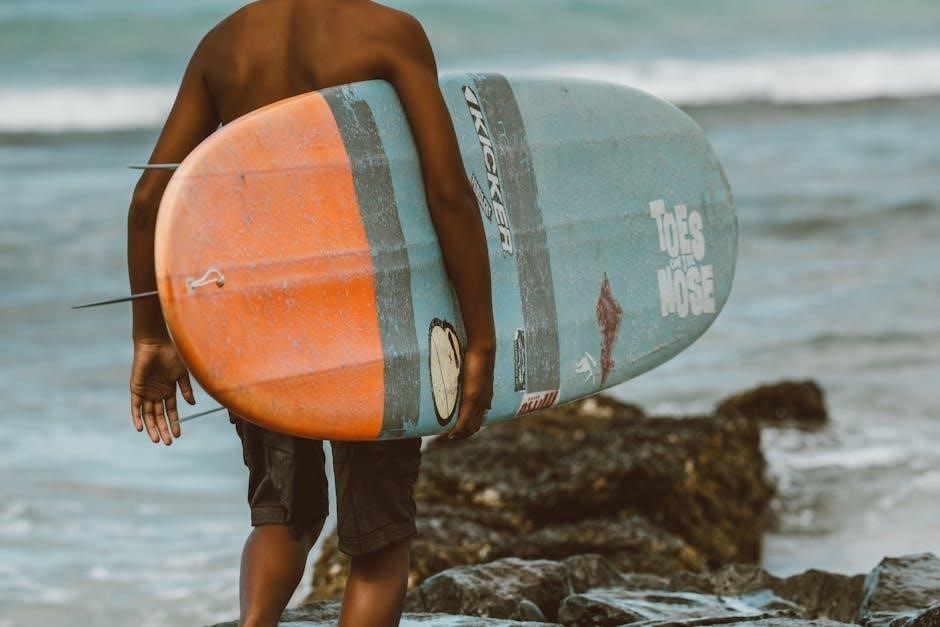
A longer wave period (measured in seconds) signifies more energy and cleaner, more organized swells. These swells tend to produce powerful, well-formed waves ideal for longer rides. Shorter periods create choppy, inconsistent waves better suited for beginners. Understanding this relationship allows surfers to anticipate wave behavior and choose appropriate equipment. Combining height and period provides a complete picture of the surf’s potential.
Recommended Surf Websites
Staying informed about surf conditions requires reliable resources. Several websites provide detailed forecasts, reports, and educational content for surfers of all levels. Surfline is a popular choice, offering high-resolution wave imagery, detailed surf reports, and a user-friendly interface. Magicseaweed (MSW) provides comprehensive swell data, wind forecasts, and spot guides, favored by experienced surfers.
The Inertia delivers news, features, and videos covering surf culture and environmental issues. For localized information, explore regional surf reports and community forums. Utilizing multiple sources ensures a well-rounded understanding of the conditions. Remember to cross-reference data and consider local knowledge for the most accurate predictions.

Physical Fitness for Surfing
Surfing demands peak physical condition; focus on paddle strength, core stability, and cardiovascular endurance to maximize performance and enjoyment in the waves.
Paddle Strength Training
Developing robust paddle strength is absolutely crucial for surfing success. Consistent paddling is the foundation of wave-catching ability, demanding endurance and power in your arms, shoulders, and back. Incorporate exercises like swimming – focusing on freestyle – to build overall upper body strength and stamina.
Weight training can also be incredibly beneficial. Include exercises such as pull-ups (or assisted pull-ups), dumbbell rows, and bench presses to target key muscle groups. Don’t neglect rotator cuff exercises to prevent injuries. Resistance band work simulating paddling motions is also highly effective. Remember to focus on proper form to maximize results and avoid strain. Regular, targeted training will translate directly to improved paddling efficiency and longer, more enjoyable surf sessions.
Core Stability Exercises
A strong core is the unsung hero of surfing, providing the essential link between upper and lower body movements. It’s vital for maintaining balance, generating power during the pop-up, and controlling your board while riding a wave. Focus on exercises that engage all core muscles – not just your abs!
Planks (various variations – forearm, side, with leg lifts) are excellent for building isometric strength. Russian twists with or without weight, and bicycle crunches target oblique muscles. Incorporate exercises like bird-dogs and dead bugs to improve stability and coordination. Pilates and yoga are also fantastic for developing core strength and flexibility. A stable core allows for quicker reactions and more controlled maneuvers on the wave.
Cardiovascular Endurance
Surfing demands significant cardiovascular fitness; Paddling out through breaking waves requires sustained effort, and even riding a wave engages your entire body. Building endurance allows you to paddle longer, catch more waves, and maintain energy throughout your surf session. It’s about more than just strength; it’s about stamina!
Incorporate activities like swimming, running, cycling, or interval training into your routine. Focus on exercises that elevate your heart rate and improve your lung capacity. Long-distance paddling, even on flat water, is excellent specific training. Remember to include rest and recovery days to prevent overtraining. A strong cardiovascular system will dramatically improve your surfing performance and enjoyment.