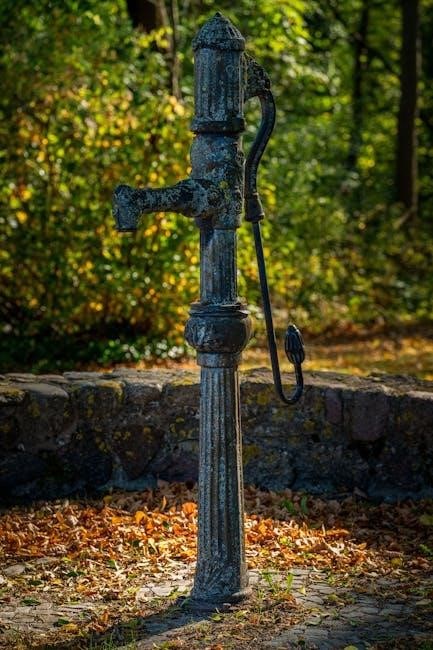
Manual water pumps require essential fittings—check valves prevent backflow, foot valves maintain suction, and strainers protect against debris, ensuring efficient and reliable operation.
A. The Importance of Proper Fittings
Employing the correct fittings is paramount for the longevity and efficiency of any manual water pump system. Without properly installed check valves, backflow can contaminate freshwater tanks, as evidenced by reported issues, necessitating repairs and potentially compromising water quality. Foot valves are crucial for maintaining prime, especially with longer suction lines.
Furthermore, strainers and filters safeguard the pump from damaging debris, preventing wear and tear and ensuring consistent performance. Utilizing appropriate threaded or flanged connections minimizes leaks, while union fittings simplify maintenance and component replacement. Ignoring these details leads to reduced pumping capacity, increased energy consumption, and premature pump failure.
B. Overview of Essential Components
A fully functional manual water pump system necessitates several key components. Check valves, vital for preventing backflow, allow unidirectional water movement, conserving energy and protecting the water source. Foot valves, placed at the suction inlet, retain prime, crucial for pumps drawing from wells or tanks.
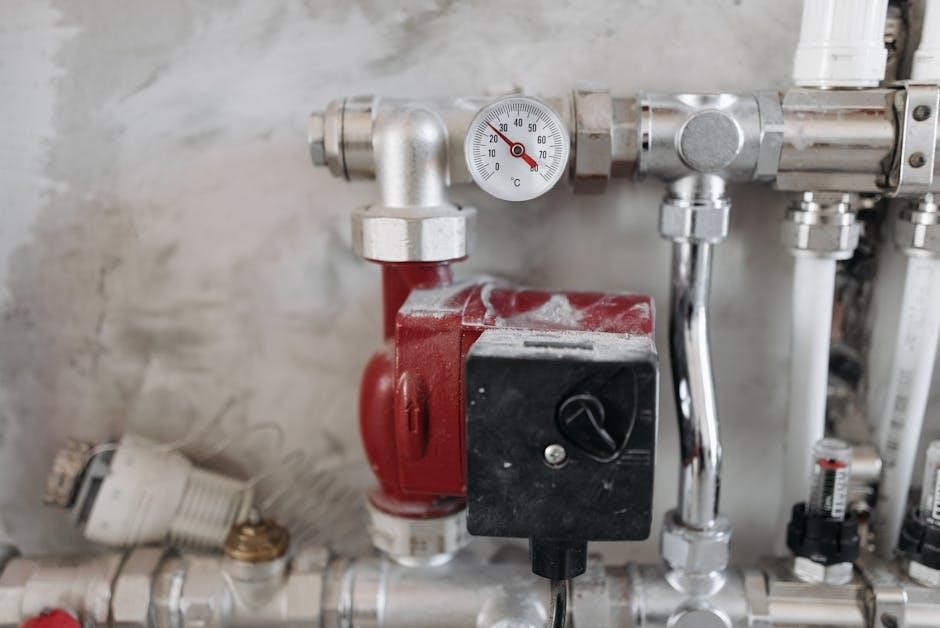
Inlet and outlet connections, often threaded (NPT or BSP) or flanged, ensure secure attachment to piping. Strainers and filters protect the pump from debris, extending its lifespan. Finally, pressure gauges monitor performance, and union fittings facilitate easy disassembly for maintenance and repair, ensuring optimal system operation;
II. Check Valves: Preventing Backflow
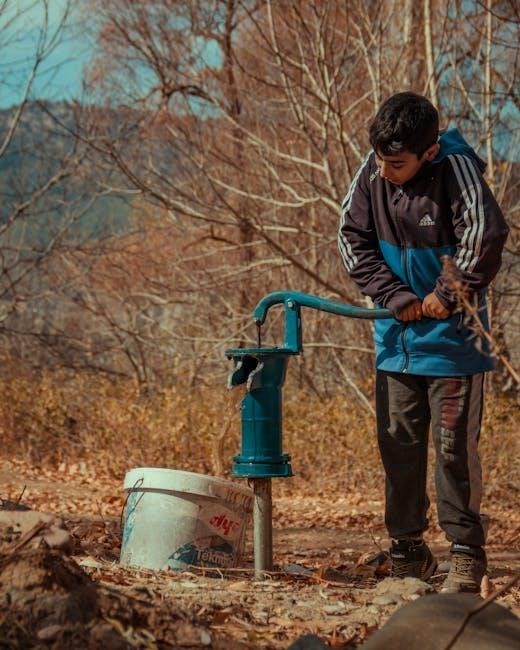
Check valves are essential, allowing water flow in one direction and preventing backflow into the water source or pump, protecting the system.
A. What is a Check Valve?
A check valve, also known as a non-return valve, is a mechanical device designed to allow fluid—in this case, water—to flow through it in only one direction. Its primary function is to prevent backflow, which can occur when a pump stops operating or experiences pressure fluctuations. These valves operate automatically, utilizing pressure differentials to open and close.
When forward pressure exists, the valve opens, permitting flow; when reverse pressure attempts to flow, the valve closes, sealing the passage. This simple yet crucial mechanism safeguards pumps and plumbing systems from damage and inefficiencies caused by reversed fluid movement, ensuring consistent and reliable operation.
B. Why are Check Valves Crucial for Manual Pumps?
Check valves are vital for manual water pumps because they prevent water from flowing back down the pipe when the pump isn’t actively pumping. This backflow can cause the pump to lose its prime, requiring repeated manual priming—a wasteful expenditure of energy and effort.
Without a check valve, the pump would need to re-pump water already lifted, reducing efficiency. They also protect the pump from water hammer, a damaging pressure surge. For systems with storage tanks, check valves maintain pressure and prevent water from draining back into the well or source.
C. Types of Check Valves Suitable for Manual Pumps
Several check valve types suit manual pumps. Swing check valves use a hinged disc, ideal for low-flow applications, offering minimal pressure drop. Lift check valves employ a spring-loaded piston, suitable for horizontal installations and preventing water hammer.
Ball check valves utilize a ball seated in a chamber, providing reliable sealing and handling some debris. The best choice depends on the pump’s flow rate, pressure, and installation orientation. Considering the system’s specific needs ensures optimal performance and longevity.
Swing Check Valves
Swing check valves are a common choice, featuring a hinged disc that swings open with forward flow and closes to prevent backflow. Their simple design makes them reliable and cost-effective for manual pump systems. They excel in low-flow applications, minimizing pressure drop during operation.
However, they require sufficient upstream straight pipe for proper function and aren’t ideal for pulsating flows. Regular inspection is crucial to ensure the disc seals correctly, preventing unwanted reverse flow and maintaining pump efficiency.
Lift Check Valves
Lift check valves utilize a disc or piston that rises off its seat with forward flow, allowing water passage, and settles back down to prevent backflow. These valves are well-suited for vertical pipe installations, leveraging gravity to aid the sealing process. They offer a positive shut-off, minimizing reverse flow even with fluctuating pressures.
However, they may require more head pressure to initially open compared to swing check valves. Regular maintenance involves checking the lift mechanism for smooth operation and ensuring the sealing surface remains free from debris.
Ball Check Valves
Ball check valves employ a free-floating ball positioned within the valve body; forward flow lifts the ball, permitting water passage, while reverse flow forces the ball against a seat, creating a tight seal. These valves excel in handling fluids with suspended solids, as the ball can dislodge particles.
They are relatively simple in design and offer quick response times. However, they may not seal as positively as lift check valves under low-pressure conditions. Periodic inspection ensures the ball moves freely and the seat remains undamaged.
III. Foot Valves: Priming and Maintaining Suction
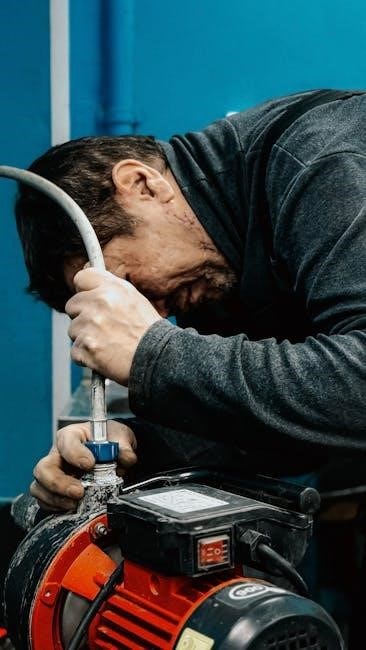
Foot valves, placed at the suction line’s inlet, retain prime within the pump, preventing water loss and ensuring quick restarts after pump operation ceases.
A. Function of a Foot Valve
The primary function of a foot valve is to maintain prime within the pump system, a critical aspect for manual water pumps. Located on the suction line’s inlet, submerged in the water source, it acts as a one-way valve. This allows water to flow into the pump when it operates, but immediately prevents backflow when the pump stops.
Without a foot valve, water would drain back into the source, necessitating manual repriming with each use – a cumbersome and inefficient process. By retaining water in the suction line, the foot valve drastically reduces priming time and ensures the pump is ready for immediate operation, enhancing convenience and reliability. It’s a simple component with a significant impact on usability.
B. Foot Valve Placement within the Pump System
Proper foot valve placement is crucial for optimal pump performance. It’s installed at the very end of the suction line, directly within the water source – whether a well, tank, or stream. The valve’s inlet should remain fully submerged, even during periods of low water levels, to prevent air from entering the system.
Positioning it too high risks air intake, causing loss of prime and pump inefficiency. Securely attaching the foot valve to the suction pipe with a strainer is also vital to prevent debris from clogging the valve and hindering water flow. Correct placement ensures consistent priming and reliable water delivery.
C. Materials Used in Foot Valve Construction
Foot valves are commonly constructed from several durable materials, each offering unique benefits. Brass is a popular choice due to its corrosion resistance and longevity, making it suitable for potable water systems. PVC provides a cost-effective and lightweight alternative, ideal for less demanding applications.
Stainless steel offers superior strength and resistance to harsh chemicals, perfect for challenging environments or aggressive water sources. The valve’s internal components, like the check disc, are often made from rubber or neoprene to ensure a tight seal. Material selection depends on water quality, pressure, and budget considerations.
IV. Inlet and Outlet Connections
Manual pumps utilize threaded (NPT/BSP) or flanged connections for secure piping, while quick-connect fittings offer convenience for frequent disassembly and maintenance tasks.
A. Threaded Connections: NPT and BSP
Threaded connections are a common method for joining fittings to a manual water pump, utilizing either National Pipe Thread (NPT) or British Standard Pipe (BSP) standards. NPT, prevalent in North America, features tapered threads creating a tight seal when tightened. BSP, widely used elsewhere, can be parallel or tapered.
Proper sealing is crucial; Teflon tape or pipe dope is applied to male threads before assembly, ensuring a watertight connection. Selecting the correct thread type is vital for compatibility, preventing leaks and ensuring system integrity. Careful tightening is also essential—over-tightening can damage threads, while under-tightening leads to leaks.
B. Flanged Connections for Larger Pumps
Larger manual water pumps often utilize flanged connections due to their superior strength and ability to handle higher pressures. These connections involve bolting two flanges together, with a gasket placed between them to create a seal. Flanges distribute stress evenly, reducing the risk of leaks compared to threaded connections in larger diameter pipes.
Flange selection considers pump pressure ratings and pipe size. Proper bolt tightening is critical, following a star pattern to ensure even compression of the gasket. Regular inspection of flange bolts and gaskets is essential to maintain a secure and leak-free system, especially in demanding applications.
C. Quick Connect Fittings for Ease of Use
Quick connect fittings offer a convenient and time-saving solution for manual water pump installations and maintenance. These fittings allow for rapid connection and disconnection of hoses and pipes without the need for tools, simplifying tasks like pump removal or seasonal setup. They are particularly useful in applications requiring frequent adjustments or portability.
However, it’s crucial to select quick connect fittings rated for the pump’s pressure and fluid compatibility. Ensure a secure locking mechanism to prevent accidental disconnection. Regular inspection for wear and tear is vital, as compromised fittings can lead to leaks and reduced pump efficiency.
V. Strainers and Filters: Protecting the Pump
Manual pumps must be fitted with strainers and filters to prevent debris from damaging internal components, ensuring longevity and maintaining optimal pumping performance.
A. Preventing Debris from Entering the Pump
Protecting a manual water pump from debris is paramount for sustained operation. Sediment, sand, leaves, and other particles can cause significant wear and tear on pump components, leading to reduced efficiency and eventual failure. Strainers and filters act as the first line of defense, physically blocking these contaminants before they reach the pump’s impeller or valves.
Without adequate filtration, even small particles can score internal surfaces, creating pathways for leaks and diminishing the pump’s ability to generate sufficient pressure. Regular cleaning or replacement of strainers and filters is crucial to maintain optimal performance and extend the pump’s lifespan, safeguarding your water supply.
B. Types of Strainers and Filters
Selecting the appropriate strainer or filter depends on the water source and debris levels. Coarse strainers, featuring larger mesh sizes, effectively remove larger particles like leaves and twigs, ideal for initial filtration in surface water applications. They require less frequent cleaning but offer limited protection against finer sediment.
Fine filters, with smaller pore sizes, capture smaller particles like sand and silt, providing a more thorough level of filtration. These are crucial for well water or situations demanding higher water purity, though they necessitate more frequent maintenance due to quicker clogging. Choosing between them balances filtration effectiveness and upkeep.
Coarse Strainers
Coarse strainers are the first line of defense against large debris entering a manual water pump. Constructed with a larger mesh size, they efficiently capture leaves, twigs, insects, and other sizable particles commonly found in surface water sources. This prevents damage to the pump impeller and maintains optimal performance.
Regular cleaning is essential, as these strainers can quickly become clogged, reducing water flow. They are typically installed on the pump’s inlet side, offering simple yet effective protection. Coarse strainers are a cost-effective solution for extending pump lifespan and minimizing maintenance needs.
Fine Filters
Fine filters provide a secondary layer of protection for manual water pumps, removing smaller particles that coarse strainers miss. These filters utilize a much tighter mesh, capturing sediment, sand, and rust particles that could cause wear and tear on pump components.
They are crucial for ensuring water quality, especially when pumping from sources prone to silt or mineral content. While offering superior filtration, fine filters require more frequent cleaning or replacement to avoid restricting water flow. Proper maintenance is key to maximizing their effectiveness and protecting the pump’s longevity.
VI. Pressure Gauges: Monitoring Performance
Pressure gauges are vital for manual pumps, displaying output and identifying performance issues like blockages or failing components, ensuring optimal operation.
A. Importance of Pressure Monitoring
Consistent pressure monitoring is crucial for manual water pump systems. Gauges provide real-time feedback on pump performance, allowing operators to quickly identify deviations from normal operating parameters. This proactive approach enables early detection of potential problems, such as clogs in the strainer or foot valve, or a failing check valve allowing backflow.
Monitoring pressure also helps assess the pump’s efficiency and overall health. A sudden drop in pressure could indicate air in the lines, a leak within the system, or increased friction due to internal wear. Regular observation of pressure readings facilitates timely maintenance, preventing costly repairs and extending the pump’s lifespan. Accurate pressure data ensures reliable water delivery and system integrity.
B. Types of Pressure Gauges for Water Pumps
Several pressure gauge types suit manual water pump applications. Glycerin-filled gauges dampen vibration, offering stable readings in pulsating systems, crucial for quick-starting pumps. Liquid-filled gauges enhance durability and accuracy, protecting internal components from wear. Mechanical gauges are cost-effective and reliable for basic pressure indication.
Digital gauges provide precise readings and often include features like data logging and alarm settings. Choosing the right gauge depends on the pump’s operating pressure, the environment, and desired accuracy. Consider a gauge with a robust casing and clear markings for easy readability, ensuring consistent performance monitoring and system protection.
VII. Union Fittings: Facilitating Maintenance
Union fittings enable easy disassembly for pump maintenance and component replacement without disturbing the entire plumbing system, streamlining repairs and reducing downtime.
A. Why Use Union Fittings?
Union fittings are invaluable for manual water pump systems, offering significant advantages during installation, maintenance, and repairs; Unlike permanently connected fittings, unions allow for sections of pipe and pump components to be disconnected without disturbing the entire plumbing layout. This is particularly useful when a pump needs servicing, replacement, or when modifications to the system are required.
They simplify the process of removing and installing the pump, saving time and effort. Furthermore, union fittings facilitate easier alignment of pipes, reducing strain on connections and minimizing the risk of leaks. Their use promotes a more flexible and manageable system, ultimately contributing to long-term reliability and reduced operational costs.
B. Placement of Union Fittings in the System
Strategic placement of union fittings is crucial for maximizing their benefits within a manual water pump setup. Ideally, install unions immediately upstream and downstream of the pump itself. This allows for quick disconnection of the pump for maintenance without needing to disassemble extensive pipework.
Additionally, consider placing unions near any components likely to require frequent removal or replacement, such as foot valves or strainers. This minimizes disruption during servicing. Ensure sufficient straight pipe runs before and after the union to facilitate easy wrench access and prevent stress on the fitting. Proper placement simplifies repairs and enhances system accessibility.

VIII. Specialized Fittings for Specific Applications
Deep well pumps need specific check valves, while surface pumps benefit from robust inlet strainers; selecting the right fitting ensures optimal performance and longevity.
A. Fittings for Deep Well Pumps
Deep well pump fittings demand robust construction due to significant depths and pressures. Specialized check valves, like the Techno Deep Well Check Valve, are crucial for quick starting and minimal pressure drop, preventing backflow in these systems. Durable materials, such as stainless steel, are preferred to resist corrosion from prolonged water exposure and mineral content.
Long runs necessitate threaded nipples alongside check valves to maintain pressure. Furthermore, ensuring a secure connection is paramount, often requiring careful selection of pipe size and threading standards (NPT or BSP) to avoid leaks and maintain efficient water delivery from the well.
B. Fittings for Surface Water Pumps
Surface water pump fittings prioritize ease of access and maintenance. Quick connect fittings simplify setup and disconnection for seasonal use or repairs. A robust foot valve is essential for priming and maintaining suction from the water source, preventing loss of prime during operation.
Strainers and filters are particularly important to prevent debris from entering the pump, safeguarding it from damage and ensuring consistent performance. PVC fittings are commonly used for their cost-effectiveness and resistance to corrosion, though brass or stainless steel may be preferred for higher pressures or specific water conditions.

IX. Material Considerations for Fittings
Fittings come in brass, PVC, and stainless steel; material choice depends on pressure, water quality, and budget, impacting longevity and performance.
A. Brass Fittings
Brass fittings are a traditional choice for manual water pump systems, lauded for their excellent corrosion resistance, particularly against potable water. They offer good strength and are easily machined and threaded, facilitating secure connections. However, brass can be more expensive than alternatives like PVC, and certain brass alloys may contain lead, raising concerns for drinking water applications—lead-free brass options are readily available and recommended.
Brass is suitable for moderate pressure and temperature conditions, making it ideal for many household and agricultural pumping needs. Its durability ensures a long service life, though it’s susceptible to dezincification in specific water chemistries.
B; PVC Fittings
PVC (Polyvinyl Chloride) fittings present a cost-effective and lightweight solution for manual water pump installations. They excel in resisting corrosion from a wide range of chemicals and are particularly well-suited for irrigation and non-potable water systems. PVC is easily joined using solvent cement, creating a watertight seal, but requires careful preparation and application for optimal performance.
However, PVC is less durable than metal fittings and can become brittle in cold temperatures. It’s also not recommended for high-pressure applications or hot water, as it may deform or fail. Schedule 40 and Schedule 80 PVC offer varying levels of pressure resistance.
C. Stainless Steel Fittings
Stainless steel fittings represent a premium choice for manual water pump systems, offering exceptional durability and corrosion resistance. They are ideal for potable water applications, handling high pressures, and enduring extreme temperatures. Different grades of stainless steel, such as 304 and 316, provide varying levels of protection against chlorides and other corrosive elements.
While more expensive than PVC or brass, stainless steel’s longevity and reliability often justify the initial investment; These fittings are typically joined using threaded connections or welding, requiring specialized tools and expertise for proper installation and a secure, leak-proof system.
X. Troubleshooting Common Fitting Issues
Address leaks at connections promptly, inspect check valve function regularly, and clear clogged strainers to maintain optimal pump performance and prevent system failures.
A. Leaks at Connections
Leaks at fittings are a common issue, often stemming from improper tightening, worn threads, or damaged seals. Regularly inspect all threaded connections—NPT and BSP—for any signs of moisture. Retighten fittings carefully, avoiding over-tightening which can cause damage. Consider using Teflon tape or pipe dope to create a better seal. For flanged connections, ensure gaskets are properly seated and in good condition. If leaks persist, disassemble the connection, inspect the threads and sealing surfaces, and replace any damaged components. Union fittings, strategically placed, can simplify disassembly and repair, minimizing downtime and ensuring a watertight system for your manual water pump.
B. Check Valve Failure
Check valve failure manifests as backflow, indicated by water returning to the source when the pump is off, as seen in freshwater tanks. This compromises pump efficiency, requiring re-pumping of water. Common causes include debris lodging within the valve (swing, lift, or ball types), or a worn/damaged internal component. Regular inspection and cleaning are crucial. If the valve is faulty, replacement is often necessary. A properly functioning check valve is vital; it allows water to pump out of the well but prevents it from flowing back, conserving energy and maintaining prime.
C. Clogged Strainers
Clogged strainers significantly reduce pump performance by restricting water flow. Debris—sand, sediment, leaves—accumulates, increasing resistance and potentially causing pump cavitation. Regularly inspect and clean both coarse and fine strainers. The frequency depends on water source quality. A noticeable decrease in water pressure is a key indicator of a blockage. Ignoring this issue can lead to pump overheating and premature failure. Strainers are a critical protective component, safeguarding the pump from damaging particles and ensuring consistent operation, extending its lifespan considerably.